Safety Before Scenery: Why you can’t beautify your way out of Dysfunction
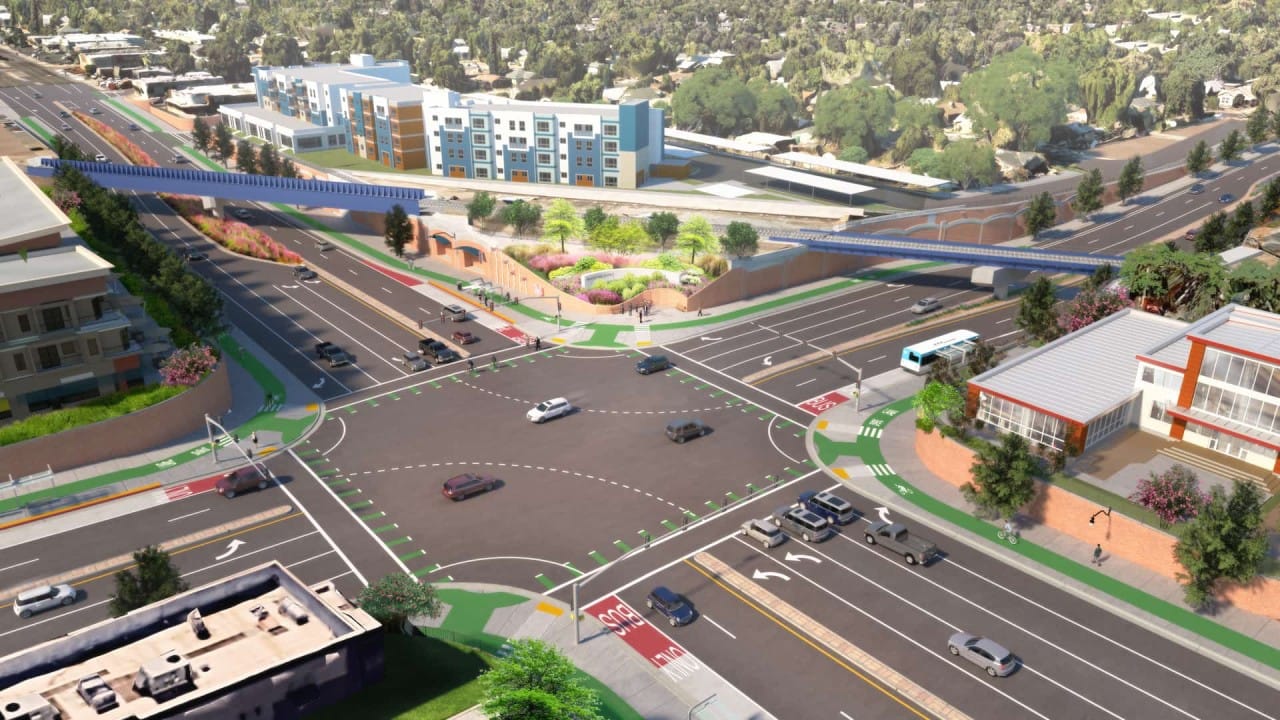
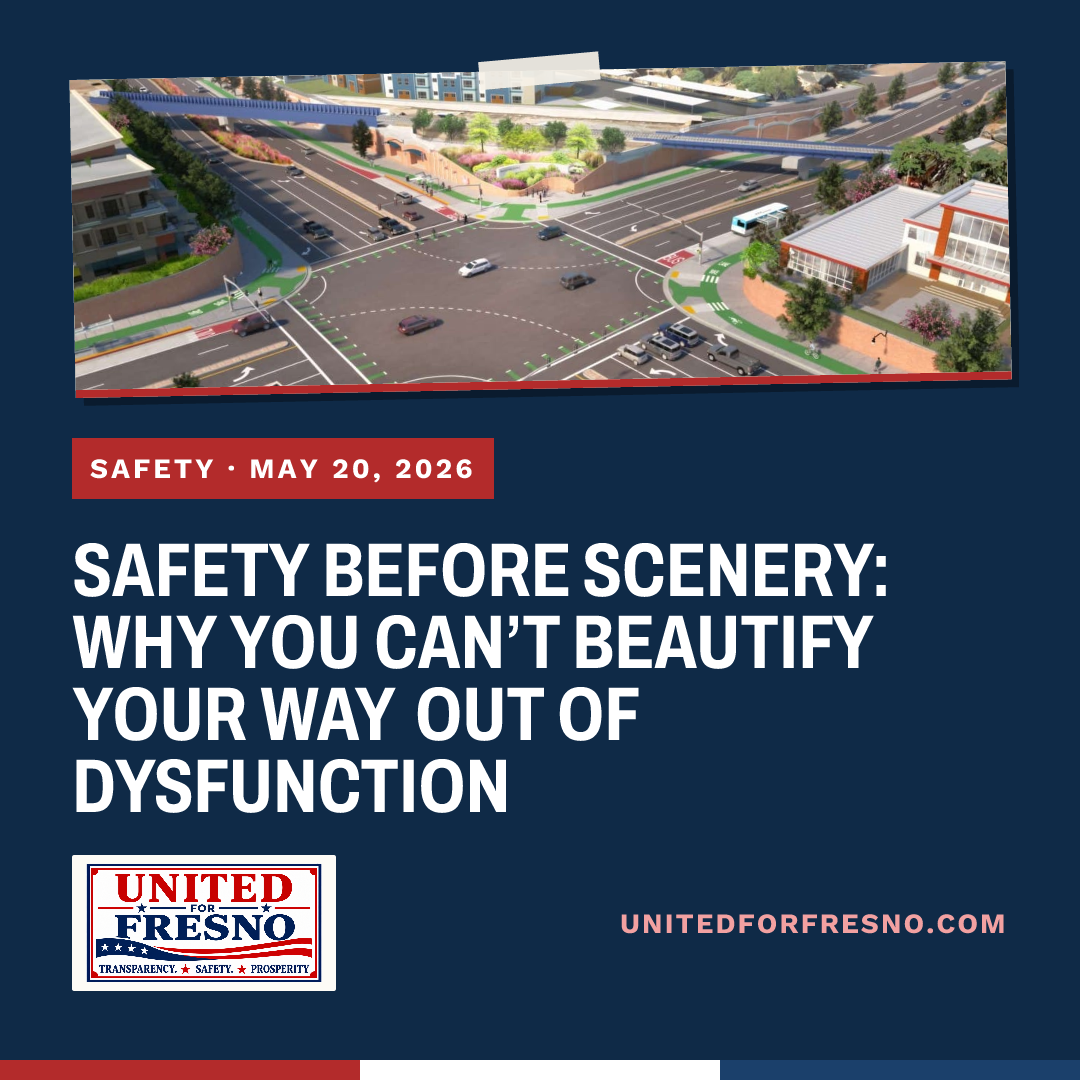
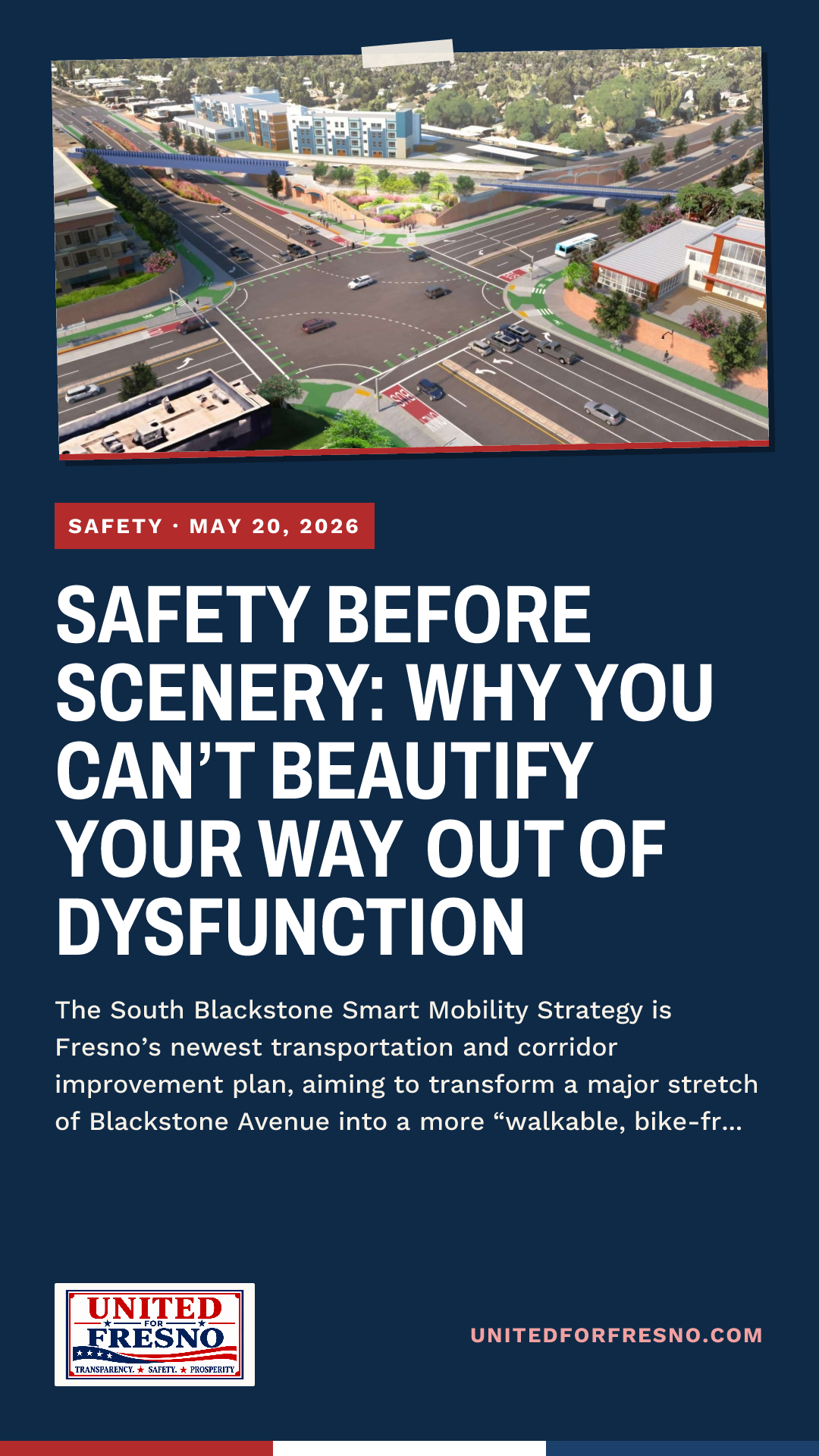
The South Blackstone Smart Mobility Strategy is Fresno’s newest transportation and corridor improvement plan, aiming to transform a major stretch of Blackstone Avenue into a more “walkable, bike-friendly, and sustainable” destination. The project promises new bike lanes, wider sidewalks, and landscaping upgrades, part of a broader effort to modernize how people move through and experience one of Fresno’s busiest commercial corridors.
On paper, the goals sound admirable: reduce car dependency, encourage cleaner transportation, and make the area more attractive for residents and businesses. But as the city moves forward, an important question arises, can infrastructure succeed if safety, homelessness, and economic stability remain unaddressed?
You can’t beautify your way out of dysfunction. Painting over rust might make something look better for a moment, but the corrosion will always return.
If shiny sidewalks and bike lanes could solve social problems, Fulton Street would already be thriving. Millions were spent on beautification, yet businesses still struggle, and families still feel unsafe. Why? Because we treated symptoms instead of causes.
Beautification is the final step of progress, not the foundation of it.
A widened sidewalk or a painted bike lane won’t make people feel safe if the environment itself remains unsafe. Fresno is ranked among the deadliest U.S. cities for pedestrians and Blackstone has the highest pedestrian accident rates in Fresno. Encouraging more cyclists and pedestrians without first addressing pedestrian safety is not vision, it’s disastrous. Every Fifty feet cars are entering or exiting businesses parking lots. Putting a bike lane between moving vehicles and those driveways creates danger for everyone.
I experienced it firsthand. Recently, while pulling out of a business on Blackstone, a cyclist appeared out of nowhere. My heart jumped, a second slower, and someone could have been hurt. Multiply that by thousands of turns each day, and we’re designing tragedy into our streets.
Traffic and Environmental Consequences
Reducing three lanes to two on Blackstone will create bottlenecks during rush hours. When freeways back up, thousands rely on Blackstone to reach their destination. Fewer lanes will mean more congestion, longer idling, and higher emissions. The problem won’t stay on Blackstone, either. Nearby streets like Palm, Maroa, and Abby will absorb diverted traffic, worsen safety and delay emergency vehicles.
Before narrowing lanes, we must first ensure a smarter design, with connected buildings, and no driveways cutting across bike paths or sidewalks, so traffic, safety, and business can coexist.
There’s nothing “green” about green congestion. Trapping cars in traffic increases pollution, not sustainability. And yet, no transparent Environmental Impact Report (EIR) has been shared with the public, even though CEQA requires it.
Expert Insight
I am no expert, so I asked an expert, I consulted Omar Attalah, a seasoned traffic engineer who is deeply familiar with Fresno’s transportation landscape. With over 30 years of experience and a background in traffic and transportation engineering from Fresno State. Mr. Attalah has contributed his expertise to major projects such as State Route 168 and the California High-Speed Rail, noted
“From a public policy and urban planning perspective, it’s generally not considered a good idea to implement a major infrastructure project like the South Blackstone Smart Mobility Strategy without first addressing foundational issues like homelessness and public safety.”
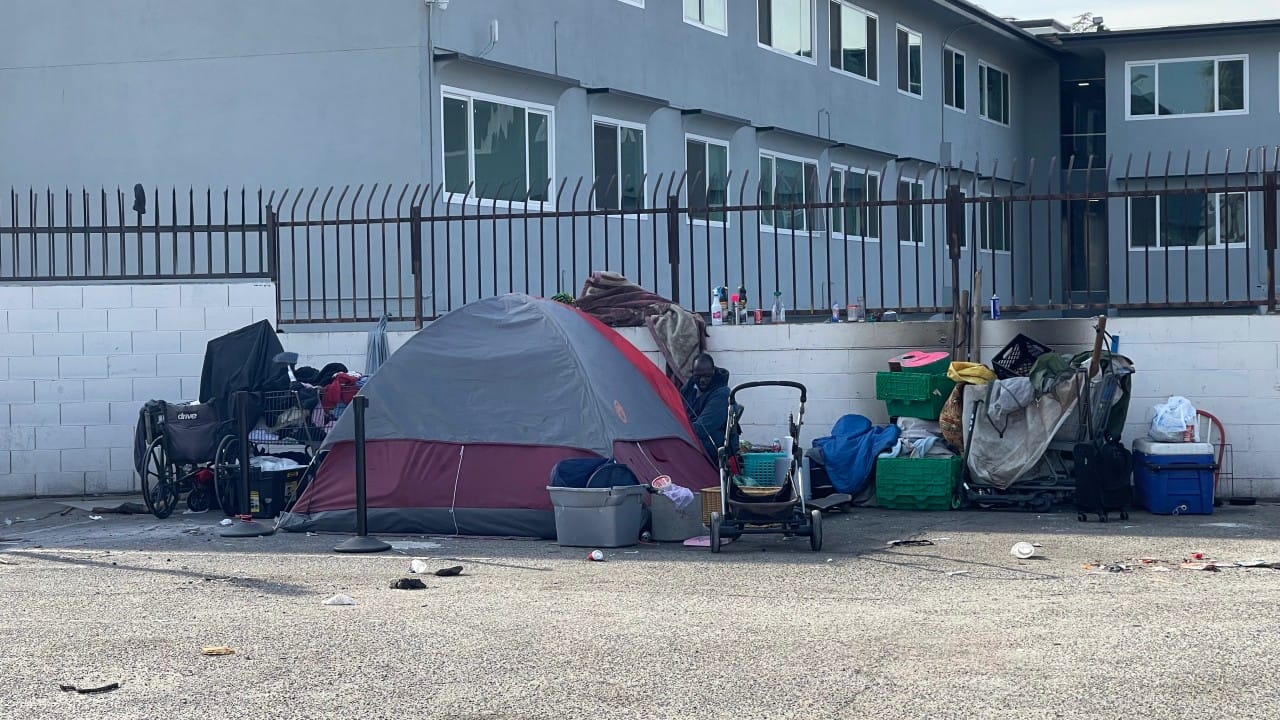
Fulton Street taught us that lesson painfully. You can install lights, benches, and fountains, but if sidewalks aren’t clean or safe, families stay away and businesses close. Beautification failed with Fulton Street because the city ignored the human element, homelessness, addiction, and mental illness that require real solutions, not window dressing.
Cities like Los Banos, San Diego, and Clearwater have created safe zones, areas that separate the homeless from gang and drug activity while offering wraparound services, rehabilitation, and job training. Leaving people on the streets is not kindness; it’s inhumane.
We don’t want to keep putting out fires; we want to prevent them. Let’s fix what’s broken before we decorate it. Let’s make Blackstone a model of true revitalization, one that begins with safety, compassion, and common sense.
Sign the petition to terminate the South Blackstone Smart Mobility Strategy. https://form.jotform.com/252857799066174